The first chapter was written before I had words for it.
In 1973, when I was two years old, my grandmother accidentally took too many sleeping pills and did not wake up. While the adults were planning out her belongings, I got into an old purse, found pills that looked like candy, and took them. There were no child-proof bottles then. That was my first introduction to substance misuse — not as rebellion, not as a choice, but as a small child reaching for something that looked sweet in a world that had already gone quiet.
I survived. That sentence matters, because survival became the theme of my life long before I understood recovery.
I was not the stereotype they show on television.
For twelve years, on and off, substance misuse was part of my life. But I was also a mother. A chef. A divorcee holding down a job and a household. I paid rent. I packed lunches. I showed up for my son every single day my ex-husband had him on the weekends, because those were the days I had to keep the world spinning.
My son's father would get him every other weekend. On the weekends my son was with him, I would go out. That is how part of it began — the so-called "weekend warrior" life, where you look functional on Monday through Friday and fall apart Friday night through Sunday. From the outside, I held it together. From the inside, I was holding my breath.
I was not lazy. I was not careless. I was a person carrying a load that had started when I was too small to name it, and I was doing the best I could with the tools I had.
Recovery is not a movie montage. It is a thousand tiny decisions.
The turn did not happen in one dramatic moment. It happened in a lot of small ones: choosing to show up instead of disappear, choosing honesty over performance, choosing to believe that I deserved a life I didn't have to escape from.
I became a Certified Peer Specialist of Mental Health (CPS-MH). I trained as a Phlebotomy Technician (PBT). I learned to sit with people in their hardest places not because I had all the answers, but because I had been in some of those places myself and I knew the way out was not a lecture — it was a steady, stubborn presence.
I am not my trauma. I am not my substance use history. I am the goat that broke free.
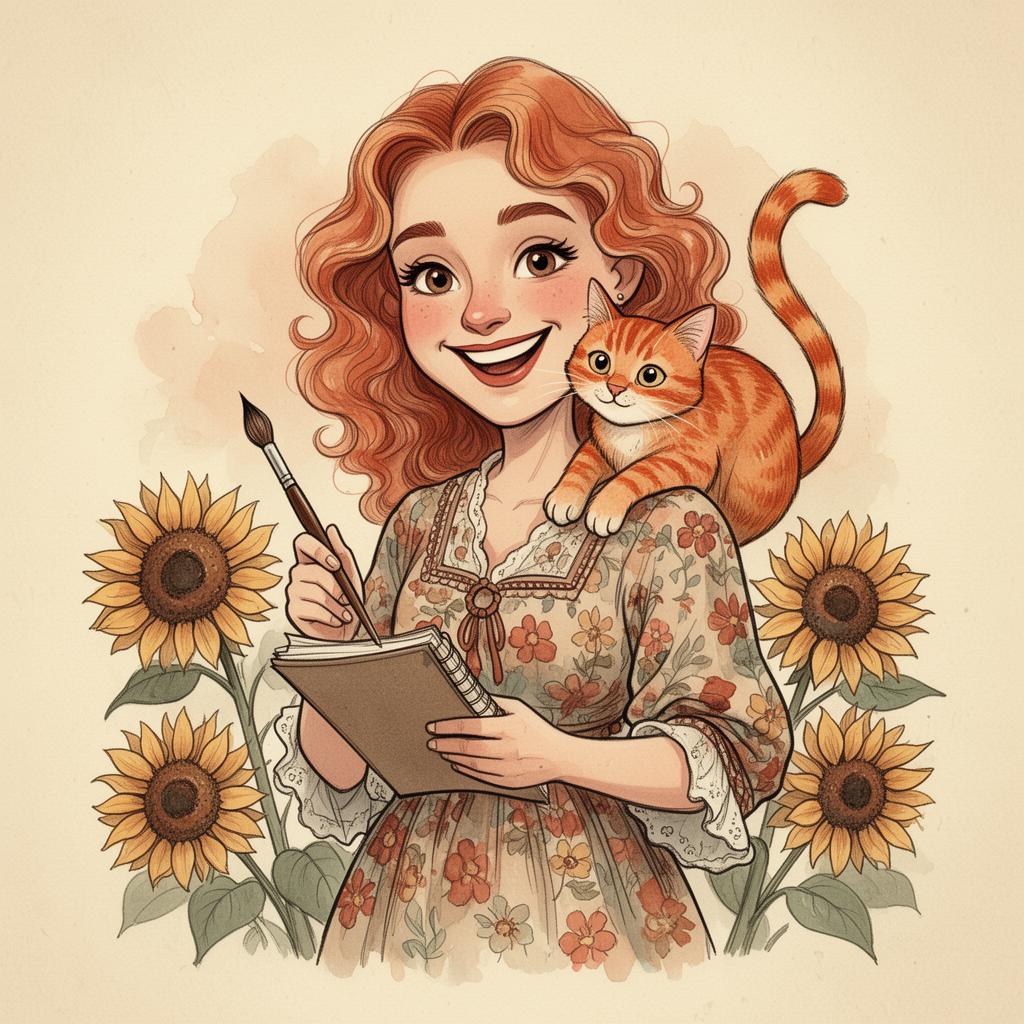
Today I run Heart of Care Full Spectrum Community Treatment Service from the Cat Nap Inn in Sterling, Georgia. I make art, feed chickens, argue with a fat orange cat, and walk with people through grief, recovery, family estrangement, and the Eight Dimensions of Wellness. I am a grandmother. A Honey Badger. A Sage and a Sire. I am still learning, and I am still here.
If you are reading this and you feel like your story is too heavy to turn around — let me tell you the truth: it is heavier than you should have had to carry, and it is not finished yet. The same strength that kept you alive through the hard years is the strength that can build the next chapter.
Where to go from here
If my story is touching something in yours, you don't have to carry it alone. Heart of Care has soft places to land, free tools, and real human support.
If you are in crisis, please reach out to the 988 Suicide & Crisis Lifeline or text or call 988. You are not alone.